
Our Blog
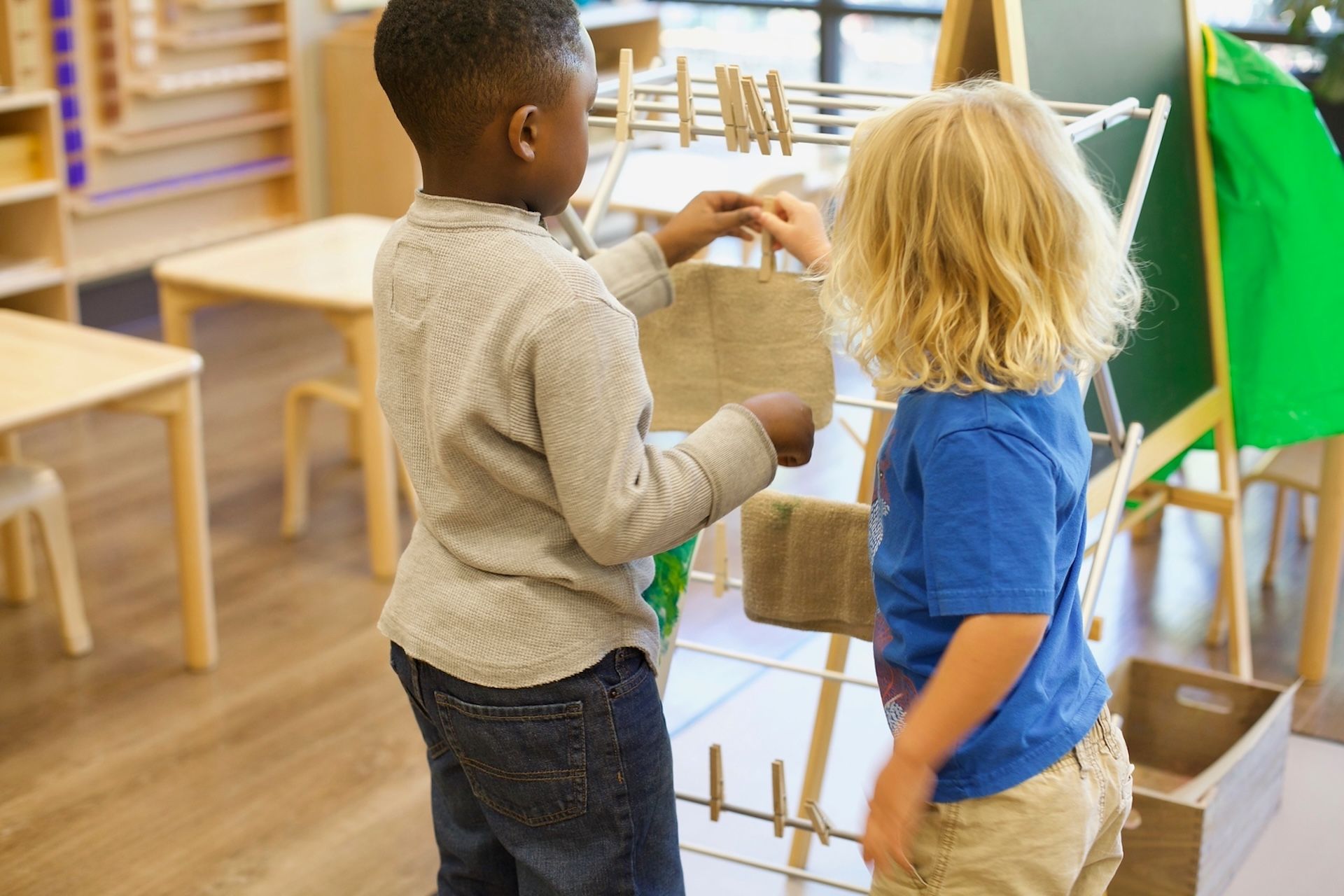
Montessori education has been in existence for over a century, but does it actually work? Dr. Angeline Stoll Lillard spent years researching this question, and her book, Montessori: The Science Behind the Genius, is a must-read. In her book, Dr. Lillard identifies eight principles at the heart of Montessori education. What’s key is that these Montessori principles align with what developmental science tells us about how humans actually learn. The remarkable thing is that Dr. Maria Montessori arrived at most of these insights through careful observation of children, decades before the research existed to corroborate how children learn. In this two-part blog post, we’ll examine these eight principles and the connected research. PRINCIPLE ONE: Movement and Learning Are Deeply Entwined In most traditional classrooms, children are still expected to sit still, as if stillness is a prerequisite for learning. In Montessori, we understand how movement and thinking are intertwined. And research backs this up. Studies have found that physical activity improves cognition, judgment, memory, and social reasoning. Moving the body isn't a break from learning. Rather, the movement is often the learning (and this is even more so for younger children!). Montessori materials are designed to be touched, carried, sorted, and manipulated. Children working with the knobbed cylinder blocks are actively perceiving, making judgments, and reasoning through their hands. The same is true when children sort fabric squares by texture, shake and compare sound cylinders, or lay out bead bars to represent quantities. Every material helps children integrate their minds and bodies. Practical life activities take this even further. When children learn to pour, button, fold, or prepare food, they are engaging in organized sequences of purposeful action that develop concentration and executive function skills. What the Research Shows A Milwaukee study found that high school students who had previously attended Montessori programs significantly outperformed peers on math and science assessments, subjects that rely heavily on the kind of reasoning that, in Montessori, is first built through hands-on materials. PRINCIPLE TWO: Choice Improves Both Learning and Well-Being The freedom to choose is at the heart of Montessori education, but this isn’t just about enjoyment. Having choice measurably affects how well children learn and how they feel about themselves. In a striking series of studies, children aged seven to nine were given anagram puzzles to solve. Those who chose their own category of puzzle solved twice as many as children whose category had been chosen for them, even though the actual puzzles were identical. Those who had a choice also spent far more time voluntarily working on puzzles during free time. The key finding is that the perception of control (even in small things) activates a fundamentally different relationship to the work. Children who feel in control tend to engage more deeply, persist longer, and take more ownership of their learning. In a Montessori classroom, children choose their own work throughout the day. Importantly, Dr. Lillard notes that this freedom is always paired with responsibility, and that too many choices can be as demotivating as none. The Montessori environment offers meaningful, bounded choice. Rather than an overwhelming array, each classroom has a selection of purposeful materials designed to match children’s developmental readiness. Choice and concentration are closely connected, too. When children choose work that genuinely engages them, they're far more likely to reach a deep state of focus, or what psychologists call a “flow state.” PRINCIPLE THREE: Children Learn Best When They're Genuinely Interested This sounds obvious, of course! It makes sense that we learn better when we are interested. However, think about this in terms of how classrooms are typically structured. If interest is one of the most powerful drivers of learning, then organizing a school day around a single curriculum delivered to the whole class at once works against almost every child in the room. Dr. Montessori understood children's interests as biological signals pointing toward what their developing minds most need to engage with at that moment in their lives. These windows of opportunity, or "sensitive periods,” are particular stretches of development during which children are uniquely primed to absorb certain kinds of learning. During these windows, learning that matches the child's inner readiness can be extraordinarily effortless and lasting. The role of interest is why Montessori materials are designed to be beautiful, engaging, and self-correcting. The sensorial materials, for example, aren't only teaching discrimination of size or color. They are designed to help children become more interested in noticing the world around them. The adult’s role is to observe carefully and offer new lessons at the moment a child's interest is most alive. PRINCIPLE FOUR: Rewards Undermine the Motivation They're Meant to Build Offering children external rewards (e.g., stickers, prizes, praise for being smart) for activities they already enjoy reliably reduces their intrinsic motivation to do those things later. What the Research Shows Researchers identified preschoolers who loved drawing with markers. They then told one group they would receive a "Good Player Award" for drawing (a fancy certificate with a gold star). Weeks later, the children who had expected the reward used the markers far less than they had before, and half as much as children who had never been offered a reward at all. Expecting a reward had turned something they loved into something they did for a prize. And when the prize was gone, so was much of the pleasure. Rewards like sticker charts, gold stars, and even grades and honor rolls, shift children’s relationship to learning from "I do this because it interests me" to "I do this to get the reward." When the reward is taken away, children’s inner drive has often already weakened. In Montessori classrooms, feedback comes through the work itself, which includes many self-correcting materials, so children discover their own errors without external judgment. The goal is to keep children's relationship to learning intrinsic, personal, and durable. This doesn't mean feedback is absent, though! What matters is the kind of feedback. Research by psychologist Carol Dweck found that praising children for effort (e.g., "you worked really hard on that”) produces dramatically better outcomes than praising ability (e.g., “you’re so smart”). Children praised for effort choose harder challenges, persist longer after failure, and actually improve their performance over time. Children praised for their intelligence begin avoiding challenges, fearing that failure will expose them as not as smart as they were told they were. In our following blog post, we’ll look at the next four Montessori principles outlined in Dr. Angeline Stoll Lillard’s book, Montessori: The Science Behind the Genius: Children Learn Powerfully from Each Other Meaningful Context Makes Learning Richer and More Lasting How Adults Interact with Children Shapes Everything Order in the Environment Supports Order in the Mind In the meantime, schedule a tour here in Old Saybrook, CT to see the principles in action! And let us know if you would like to borrow a copy of Montessori: The Science Behind the Genius by Dr. Angeline Stoll Lillard. It is one of the most research-based books on Montessori education, and we recommend it to anyone who wants to understand the deeper logic of Montessori!
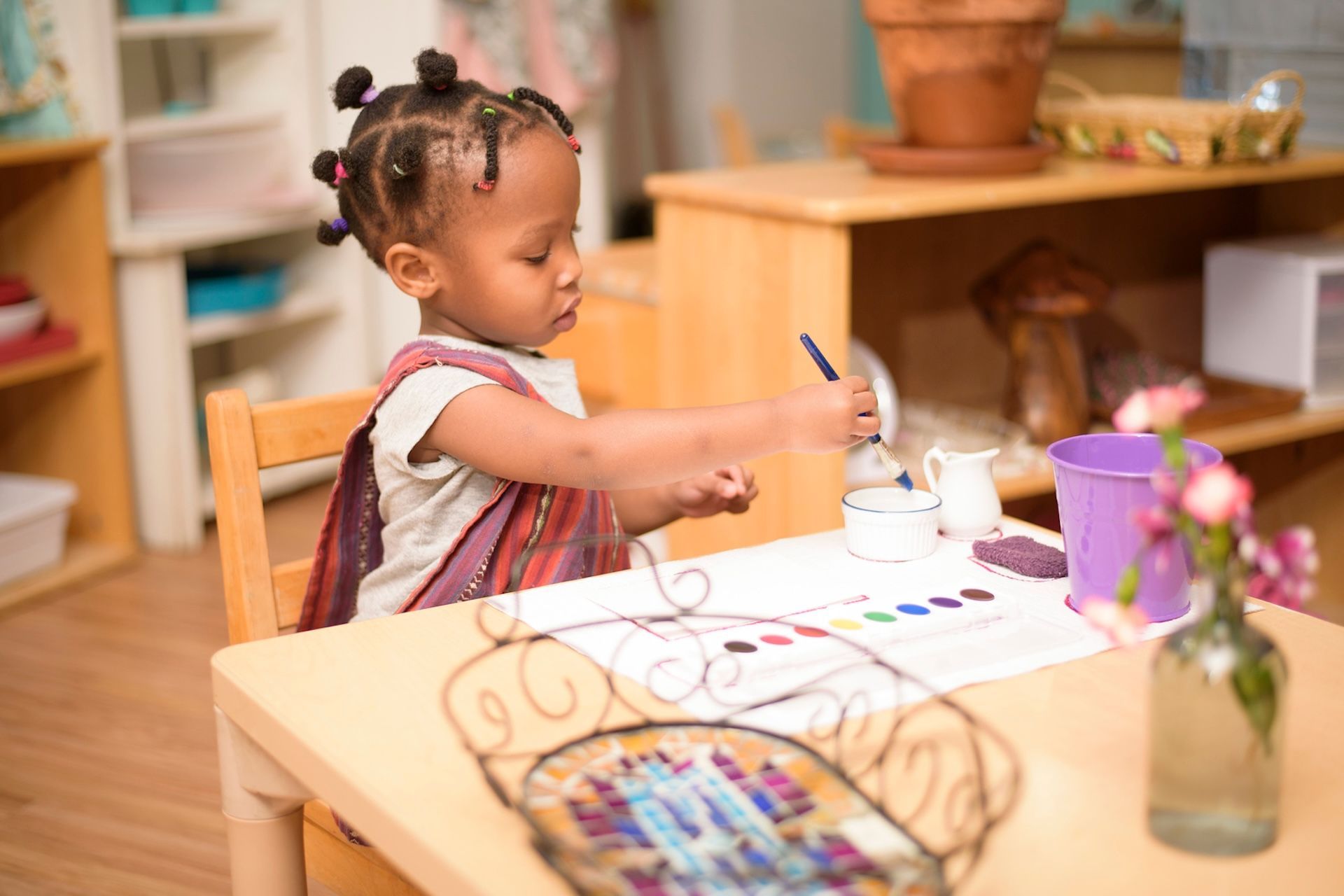
In Part One of this series, we began exploring the eight Montessori principles that Dr. Angeline Stoll Lillard examines in her landmark book, Montessori: The Science Behind the Genius. As we saw, what makes these principles so compelling is that Dr. Maria Montessori's intuitions about children were a precursor to what decades of developmental science have since confirmed about how humans actually learn. In this second and final installment, we pick up where we left off, examining the remaining principles and the research that brings them to life. Whether you're a parent, an educator, or simply someone curious about what effective learning really looks like, these insights offer a fascinating window into the remarkable alignment between one woman's careful observations over a century ago and the science we have today. If you haven’t already, be sure to check out the previous four principles: Movement and Learning Are Deeply Entwined Choice Improves Both Learning and Well-Being Children Learn Best When They're Genuinely Interested Rewards Undermine the Motivation They're Meant to Build PRINCIPLE FIVE: Children Learn Powerfully from Each Other When you walk into a Montessori classroom, you’ll notice that children are almost always working near or directly with other children. Peer learning is one of the most effective forms of learning, and Montessori classrooms are deliberately structured to make it a constant. Much of this learning happens through observation. When a child watches a slightly older classmate work through challenging material, they're absorbing the technique and the possibility. They begin to see what they can do! Peer observation often drives a spontaneous "explosion" of writing or number awareness, spreading through a class (e.g., one child suddenly writing everywhere, then several more following). The mixed-age grouping in Montessori classrooms amplifies this. Younger children always have a visible horizon of what's coming next. Older children consolidate their own understanding by helping younger ones (which is one of the most effective learning strategies known). And the large, stable class community means children have time to build genuine relationships and observe one another across many contexts over several years. PRINCIPLE SIX: Meaningful Context Makes Learning Richer and More Lasting Children remember far more when what they're learning is connected to something real and purposeful. What the Research Shows In one study, three-year-olds were asked to memorize lists of items. When the lists were presented as shopping lists for a pretend store, the children remembered twice as many items as those who were simply told to memorize a list. Montessori education is built on this principle. Practical life activities such as cooking, cleaning, caring for plants and animals teach children that the skills they are learning connect to the real world. The Montessori curriculum is deliberately integrated. Vocabulary develops alongside sensorial exploration. Math concepts are entwined with concrete materials that make abstract ideas visible. Knowledge in one area consistently links to knowledge in others. This is why Montessori materials are not isolated exercises but part of a spiral curriculum that returns to the same ideas with greater depth and complexity as children grow. PRINCIPLE SEVEN: How Adults Interact with Children Shapes Everything The way an adult responds to a child's efforts has effects that ripple far beyond the moment. What the Research Shows Carol Dweck's research, now widely cited, demonstrated that a single sentence of feedback can set children on divergent trajectories. Children told "you must be smart" after succeeding at a problem later chose easier tasks, enjoyed them less, and performed worse after encountering difficulty. Children told "you must have worked hard" sought harder challenges, recovered from failure more readily, and improved their performance over time. The difference is in the delivery of one sentence! The implications are profound for how we talk to children about both their successes and their struggles. In a Montessori classroom, the adult’s role is carefully defined: to observe, to connect children to materials at the right moment, to step back when a child is productively engaged, and to step in only when something is genuinely unproductive or unsafe. This requires a great deal of precision and restraint. An adult who constantly intervenes, corrects, and directs trains children to look outward for approval. An adult who observes and offers at the right moment helps children learn to look inward. Consistency and long-term relationships also matter. The multi-age grouping in Montessori means that children spend multiple years with the same adults, building the kind of attachment and trust that research consistently links to stronger learning outcomes and healthier social-emotional development. PRINCIPLE EIGHT: Order in the Environment Supports Order in the Mind The Montessori classroom's distinctive aesthetic reflects a deep understanding of how the environment shapes cognition. What the Research Shows Research consistently shows that noise, clutter, and unpredictability are cognitively costly for children. When an environment is chaotic, children spend precious mental energy managing uncertainty rather than engaging in learning. Temporal order matters as much as spatial order. The three-hour uninterrupted work cycle (a hallmark of Montessori classrooms) gives children long enough stretches of focused time to move from initial engagement to deep concentration and, eventually, to the kind of absorbed flow that produces real intellectual development. Frequent interruptions (bells, transitions, whole-class pivots) train children to work in short bursts and to constantly reorient. The three-hour cycle allows children to go deep. Children in Montessori classrooms are also responsible for maintaining their environment by returning materials to their proper place, caring for plants and classroom spaces, and treating everything with consideration. This care builds the child's relationship to order as something they participate in creating rather than something imposed from the outside. Even noise levels matter in ways that go beyond comfort. What the Research Shows Research cited by Dr. Lillard found that across all ages, noise was one of the most consistently negative influences on cognitive development, partly because it interferes with the auditory discrimination that underpins both reading and vocabulary development. The quiet that characterizes a well-functioning Montessori classroom is the natural result of many children deeply absorbed in their own work. What makes Dr. Lillard’s work so valuable because it validates the Montessori method and gives the why behind practices that can otherwise seem puzzling from the outside. There are important reasons why Montessori teachers don't correct every error, why there are no gold stars, why the classroom is so quiet, and why children seem to do the same work over and over. This approach to education is deeply rooted in creating conditions in which children's natural drive to learn can develop as fully as possible! To learn more, visit our school here in Old Saybrook, CT. And let us know if you would like to borrow a copy of Montessori: The Science Behind the Genius by Dr. Angeline Stoll Lillard! It is one of the most research-grounded books available on Montessori education, and we highly recommend it for anyone who wants to understand the deeper logic of Montessori!
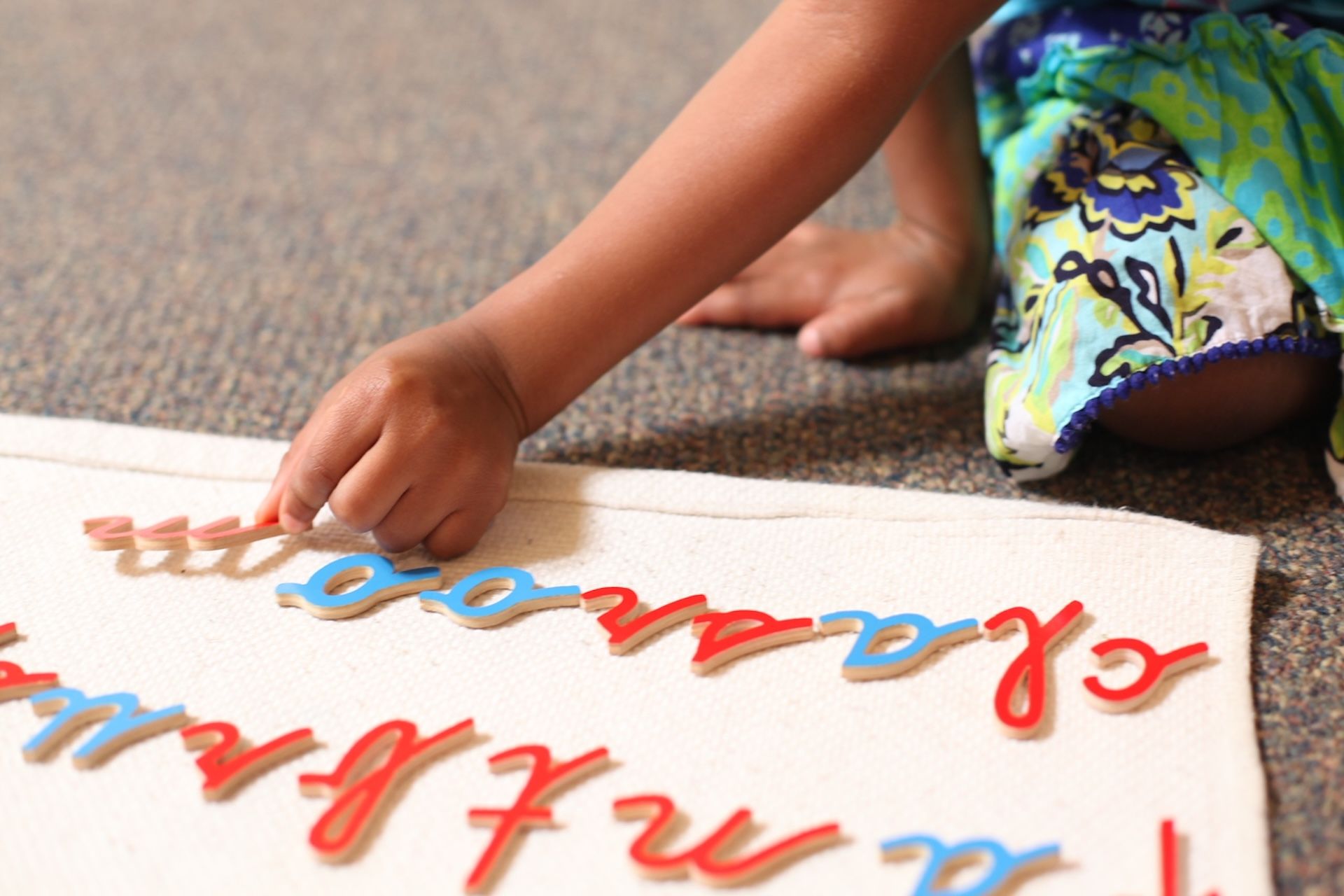
Time is one of the most abstract concepts for a young child to understand. Yesterday, tomorrow, next week, last month. These words float through daily conversation long before a child has any concrete sense of what they actually mean. For young children, the passage of time isn't yet something they can feel or visualize. So how do we build an understanding of time? This is where Montessori timelines come in, and they do far more than most people realize. Making Time Tangible In a Montessori classroom, timelines aren't decorations on the wall. Children actually use the timelines. They handle timelines, construct the pieces, arrange items in sequence, and ultimately connect the vocabulary they've been hearing to something they can see and touch. Children who work with timelines begin to understand that Monday comes before Tuesday, and how days accumulate into weeks, weeks into months, and months into years. The concept of time becomes something children can hold in their hands, rather than simply a word a grown-up uses. Dr. Maria Montessori was clear about why this matters for young children. In The Absorbent Mind, she wrote that children at this age are "urged by the laws of their nature to find active experiences in the world about them" and that they take in knowledge through activity involving movement. The timeline is a perfect expression of this principle. Children don't passively receive information about history or time. They construct their understanding of it actively through their hands. A Gateway Into History As children grow more confident with the concept of time, timelines become a natural bridge into history itself and the kind of thinking history requires. How did human societies change over the centuries? How did life on Earth evolve over vast stretches of time? These are enormous, abstract questions, and yet Montessori children approach them with genuine curiosity and engagement, precisely because they've already been laying the groundwork through hands-on work with time. The timeline gives children a structure for imagining what they cannot directly see or experience. This support is significant. The ability to mentally reach beyond the present moment and picture the past or the future is one of the most distinctly human capacities we have. Montessori timelines help children develop and strengthen exactly this capacity, at precisely the age when it is beginning to emerge. The Balance Between Imagination and Reality Dr. Montessori wrote about the relationship between imagination and abstraction, and considered them as two powers of the mind that "go beyond the simple perception of things actually present." Both are essential. And crucially, both need to be developed together, grounded in each other, rather than in isolation. This balance of abstraction and structure is one of the gifts of the Montessori timeline. When a child works with a timeline, their imagination is anchored in sequence, in order, in fact. The structure of time provides the foundation from which their imagination can safely and richly expand. As Dr. Montessori put it, "the effort to cultivate imagination alone must lead to a lack of balance which becomes an obstacle to success in the practical things of life." In other words, wonder needs a scaffold. And the timeline provides one. Building Character Through Order As children are learning to place events in sequence, they are creating mental order that provides a sense of stability and confidence in understanding cause and effect across time. Dr. Montessori described this internal ordering as foundational to the development of personality itself. The experiences children have (and the work they do with their hands and minds) shape who they are becoming. This goes beyond just information. It’s about building the self! What This Looks Like in Practice In a Montessori classroom, a child might work with a simple personal timeline first to understand their own life in sequence, which can be tailored to different ages or learning styles. From there, they might explore timelines for the days of the week, the months of the year, or the stages of a butterfly's life. As they progress, the timelines expand dramatically to encompass the history of human civilization, the development of written language, and even the story of life on Earth itself, accommodating diverse developmental needs. Each experience builds on the last, deepening both historical understanding and children's capacity for abstract, imaginative thought. The timeline, although an excellent teaching tool, is so much more. It is a way of helping children understand their place in the great sweep of time, and in doing so, they are better able to understand themselves. We'd love to show you how timelines and other Montessori materials work in our classroom. Schedule a visit here in Old Saybrook, CT to see the work in action.
When most people think about what children need to thrive, they first think of the basics: food, sleep, safety, and love. Abraham Maslow described how fundamental needs (such as food, shelter, and sleep) must be met to satisfy higher spiritual needs, such as belonging, self-esteem, and self-actualization. What is perhaps less well known is that Montessori education builds on a very similar understanding of human nature and that we carefully design the prepared environment to meet not just children's academic needs, but their deepest human ones. Dr. Maria Montessori wrote generally about human tendencies, and her son, Mario Montessori, reviewed her work to identify specific innate drives and needs shared by all of us, regardless of culture or era. These tendencies don't change. They are part of what it means to be human. And when we give children an environment that honors and nourishes them, something remarkable happens: they begin to construct themselves from the inside out. The Need to Explore Every child is born with a drive to move, to discover, and to make sense of the world. This drive is a fundamental human instinct. As Dr. Montessori observed, the urge to explore isn't simply about getting somewhere better. It is a primitive, vital impulse to engage with life. But exploration requires a foundation of security. When children’s environment is chaotic or unpredictable, they must constantly spend their energy simply reorienting themselves. Constant reorientation means they are expending energy on figuring out what's where and what comes next, rather than on curious, joyful discovery. This is why we design Montessori classrooms with such deep intentionality. Materials are always in their place. The order is consistent and reliable. Within this predictable structure, children feel safe enough to truly explore, and through that exploration, they begin to develop an internal order that mirrors the order around them. The Need to Work Humans learn by doing. Think of the words of Confucius: I hear and I forget. I see and I remember. I do and I understand. Throughout history, purposeful human work has created civilizations, driven innovation, and provided individuals with a profound sense of meaning and self-worth. Children have this need for meaningful activity within them. They want to work in real ways! Woven into this human tendency for work is a cluster of connected needs: the need for activity, for manipulation, for repetition, for exactness, and for self-perfection. Montessori materials are designed to honor all of these. They are hands-on, precise, and designed to be worked with again and again. Each time a child repeats an activity, such as pouring water carefully, sorting objects, tracing the shapes of letters, they are integrating mind and body, learning from their mistakes, and moving toward a more perfected version of themselves. They absorb complex concepts through experience, repeated freely and with deep engagement. The Mathematical Mind Humans have an innate drive to measure, classify, organize, and make sense of the world in precise ways. Dr. Montessori was inspired by the philosopher Pascal, who wrote that the human mind is mathematical by nature. Knowledge and progress come from accurate observation. Dr. Montessori called this the mathematical mind. And she saw it not as an academic aptitude but as a fundamental human characteristic. The Montessori sensorial materials are designed with this tendency in mind. Think of the pink tower, color tablets, or geometric solids. When children work with these materials, they are training their powers of observation and building the precise mental framework from which abstract thinking and imagination will eventually grow. As Dr. Montessori wrote, if the true basis of imagination is reality, then helping children perceive the world with accuracy is one of the greatest gifts we can give them. The Need to Belong As children engage deeply with meaningful work in the Montessori environment, something shifts. They become more focused. More settled. More themselves. And from this state of inner calm, children begin to experience a natural orientation toward others. This is deeply human. The drive to communicate, to belong, to understand ourselves in relation to a community, has shaped human civilization from its earliest days. Montessori classrooms are like small, practice societies: mixed-age communities where children learn to work alongside one another, contribute, notice others' needs, and think not only about their own success but also about the well-being of the group. As Dr. Montessori stated, “social integration has occurred when the individual identifies himself with the group to which he belongs.” Individual interests and communal ones begin to align. We don’t teach this awareness of community through rules or enforce it through compliance. It develops organically when we give children ideal conditions to grow into it. The Spiritual Dimension And then there is something deeper still. Something that is harder to name, but unmistakable when you see it. Humans have always sought meaning beyond themselves. Through art, music, ritual, and community, we reach toward something greater, toward beauty, transcendence, and a sense of connection with life itself. This spiritual dimension of human experience is not reserved for adults. Children feel it too. Dr. Montessori used music to describe this tendency. Music is exact and beautiful, and when it truly reaches a person, it moves them, literally and figuratively. Something is set in motion, deep inside. Dr. Montessori then drew a direct parallel to what happens when children encounter an activity that genuinely engages them. When children feel and understand something that arouses their interest, they begin to move. Their movements connect to the work. Gradually, a unity develops in their personality. They repeat the activity with deep concentration. And when they finish, they seem different: happier, more satisfied, calmer, more at rest. Something elevates within them. This transformation is at the heart of what Montessori education is reaching toward. The classroom is not simply a place where children learn to read and count. It is a place where children are recognized as spiritual beings, where their souls, not just their minds, flourish through movement, engagement, beauty, and understanding. What This Means for Families Mario Montessori wrote that every child is born with human tendencies as potentialities, and that children make use of them to build themselves into a person suited to their time. What the Montessori environment does is provide the conditions in which those tendencies can be met, honored, and developed to their fullest expression. When we nourish children’s needs for exploration, work, mathematical thinking, belonging, and spiritual engagement, they become capable learners and, perhaps even more importantly, whole people who are curious, grounded, socially aware, and at peace with themselves and the world. And that, as Dr. Montessori always believed, is the foundation for individual flourishing and of a more peaceful society for all of us. We'd love for you to experience our prepared environment for yourself. Schedule a visit here in [Your Location] and see what it looks like when children have the space to truly become themselves..
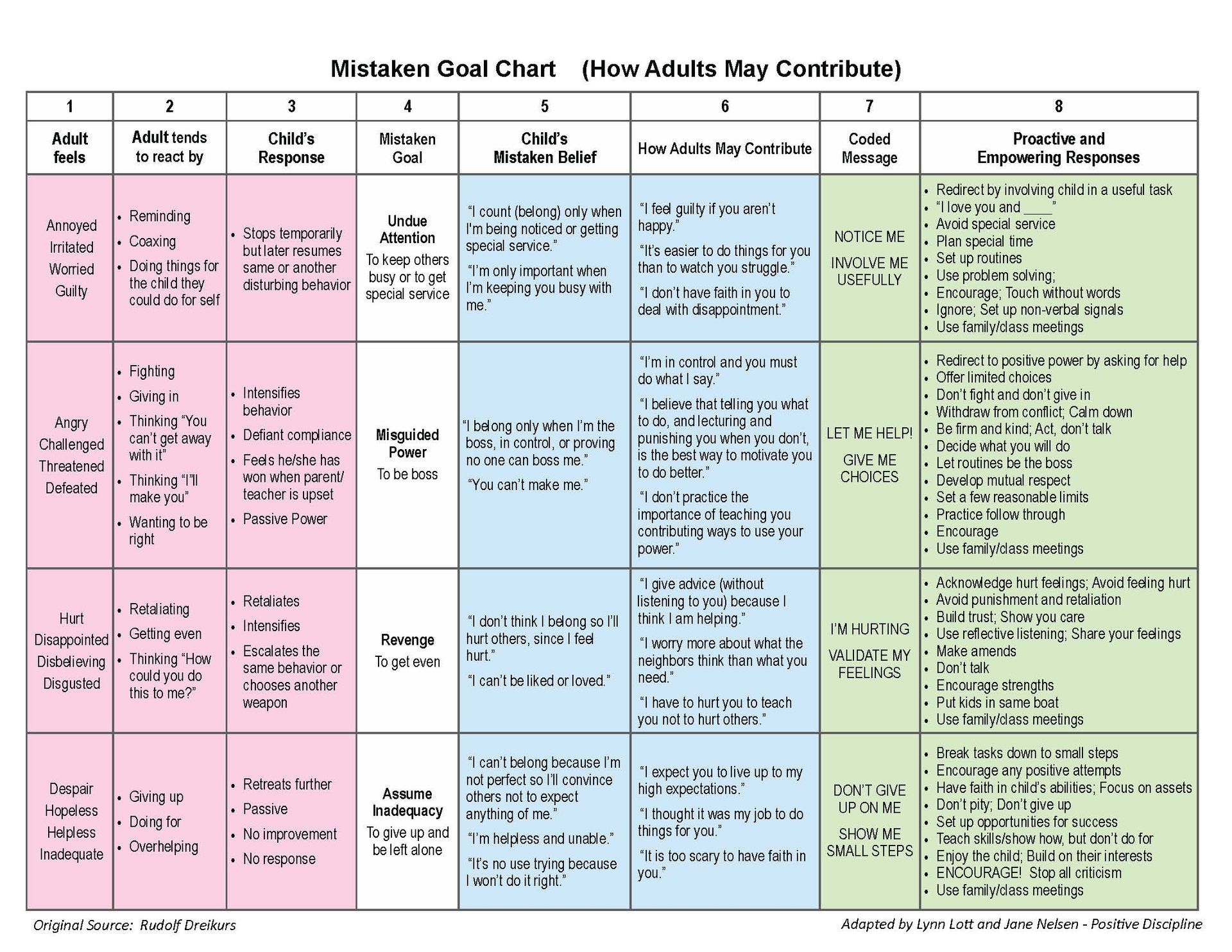
We often think about how to handle our children's outbursts: when they talk back, get aggressive, or are hurtful. But we don't often give ourselves enough space to process what to do when we, as adults, are the ones to snap. And we've all had those parenting moments: when we lose our cool, yell, or feel an intense level of frustration. The worst part is when these moments happen right before we drop our child off at school, so we start our day feeling rotten, with no way to make amends. Sometimes these moments come from (or lead to) a pendulum swing in our parenting approach. Perhaps we've tried to be loving and model gentle parenting principles, but in the process, set weak boundaries or let our child dictate the terms. Then we feel like we need to make up for being too lenient by swinging to the opposite extreme, perhaps shouting, threatening, or imposing harsh consequences. The result? Our children are confused by the inconsistency, and we feel guilty, which sends us swinging back to permissiveness again. So what do we do? Be gentle on yourself first . Even when an outburst feels immense, our worst parenting moments do not define us or our relationship with our children. Parent Coach Nicole Schwarz offers this: "That was a moment in time. Learn what you can from the experience, make changes as needed, and move forward. Don't let one mistake overshadow the positive moments and parenting wins, even if they seem small." Model making amends . When we lose our patience, the path forward can be an intentional opportunity to show our children what accountability looks like. Jane Nelson's "Three R's of Recovery" from Positive Discipline offers a simple framework. First, recognize: once you've cooled off, acknowledge your mistake without weaving in blame — something like, "I feel really bad about how I spoke to you. You didn't deserve that." Then, reconcile: offer a genuine, heartfelt apology. And finally, resolve: work together to find a solution, inviting your child into the conversation as a true collaborator. When we model this kind of accountability, our children learn that mistakes are opportunities for growth and connection. Think about lagging skills. Dr. Ross Greene, clinical psychologist and author of Raising Human Beings, offers another perspective. He reminds us that children behave in challenging ways because they lack the skills needed, and given the choice, every child would rather do well. This reframe can help us shift from reacting to the behavior to getting curious about what's underneath it. Get curious instead of reactive. One way to get curious is to stay calm in challenging moments, simply observe without judgment, and ask (with genuine curiosity and empathy), "What's going on?" Then comes the harder part: actually listening. This is when we tend to want to jump in with advice or steer toward a solution, but it’s much more powerful to genuinely hear what our children have to say. This Empathy Step, as Dr. Greene calls it, is often where the real shift happens because a child who feels truly heard is far more open to collaborating on a solution that works for everyone. Our job isn't always to fix things. Sometimes it's simply to slow down, listen, and trust that our children, when given the space and support, are more capable problem-solvers than we give them credit for. Consider what unmet needs might be at play. Psychiatrist Rudolf Dreikurs believed that all behavior has a purpose, and that beneath most challenging moments is an unmet need trying to make itself known. He identified four common "mistaken goals" behind challenging behavior: a bid for attention, a need for power, a hurt looking for acknowledgment, or a quiet kind of giving up. Each carries a coded message worth decoding. A Positive Discipline Mistaken Goal Chart can help, offering a framework to match our emotional reactions to what our children might really need. Reflect on our own patterns. Once we've extended some grace to ourselves and reconnected with our children, it's worth taking time to reflect on the bigger picture. Researchers have identified four general parenting approaches: the authoritative parent, who balances warmth with clear, consistent boundaries; the authoritarian parent, who leads with strict rules and expects obedience without much explanation; the permissive parent, who is deeply loving but struggles to hold limits; and the uninvolved parent, who is largely disconnected from their child's emotional and practical needs. Most of us won't see ourselves perfectly in just one category. And most of us will recognize, with some honesty, that stress, exhaustion, or our own upbringing can pull us toward patterns we don't always feel proud of. The goal is awareness. When we can pause and notice the style we're operating from in a given moment, we have the opportunity to choose something more intentional, and that keeps connection and respect at the center, even on the hard days. Parenting is a tough job! We are here for support and would be delighted to have you schedule a visit here in Old Saybrook, CT.
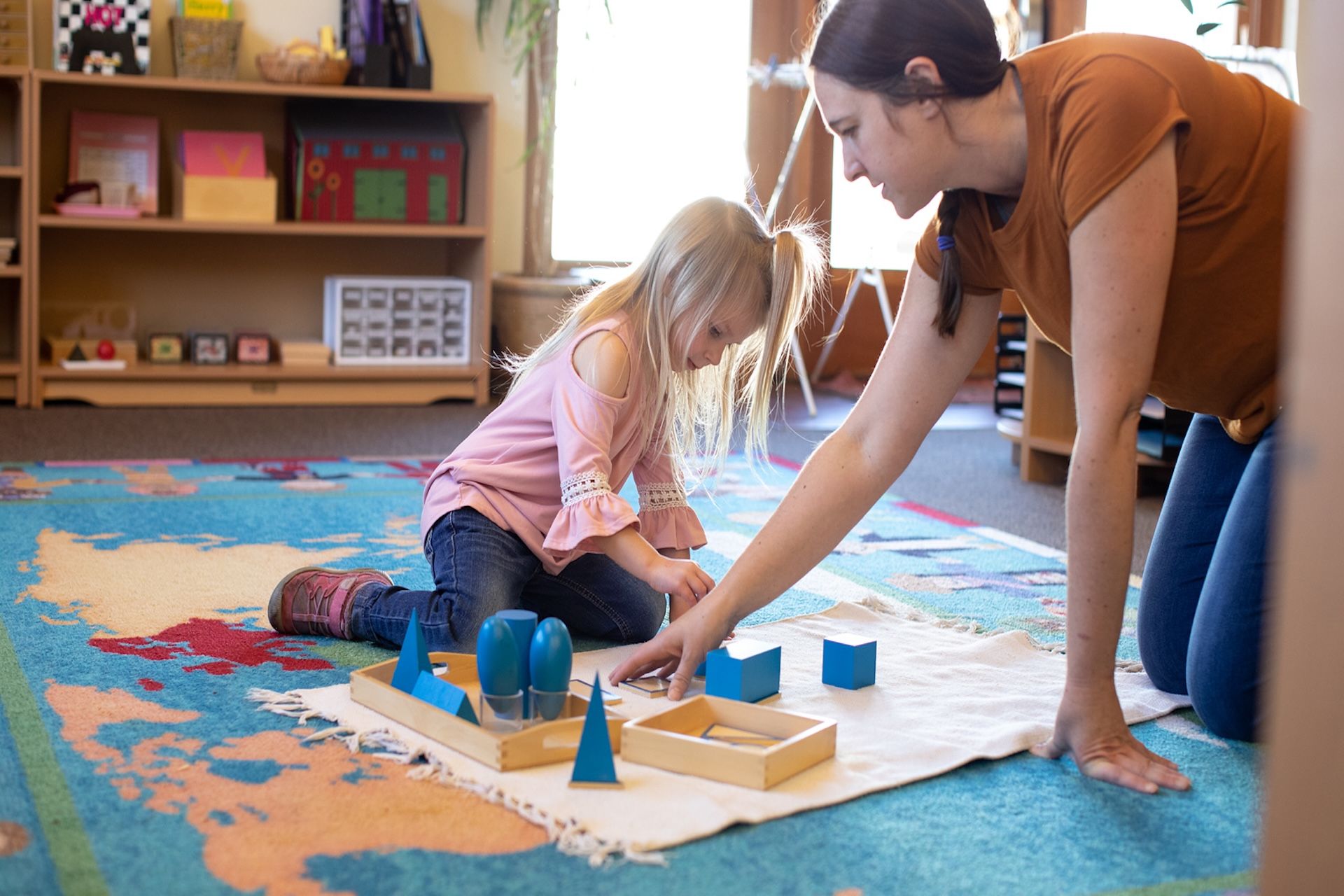
Have you ever watched a Montessori teacher give a lesson and thought, "That seemed...very short!”? If so, you may have witnessed a three-period lesson. What looks almost effortlessly simple is actually one of the most carefully designed teaching techniques. The three-period lesson is the primary way we introduce new vocabulary to young children. We use it constantly for phonetic sounds, geometric shapes, textures, quantities, names of parts of a flower, names of continents, and so much more. Virtually every time children learn a precise new word for something they're experiencing with their senses, we are using a version of this lesson. Why Vocabulary Needs Its Own Method Young children are in what Dr. Montessori called a sensitive period for language. This is a window of time when children’s minds are especially primed to absorb new words and refine their understanding of them. It’s important to keep in mind, though, that absorbing a word isn't the same as truly knowing it. Children might hear the word "rough" many times without ever firmly connecting that sound to what their fingers actually feel on a piece of sandpaper. The three-period lesson closes the understanding gap. It's built on an insight Dr. Maria Montessori borrowed from educator Édouard Séguin. Learning a word happens in stages: first association, then recognition, then recall. Moving through those stages deliberately, with no extra words or distractions to clutter the lesson, gives children's minds the clearest possible path to making a lasting connection. “Both object and name should strike the child's understanding at the same time — but only the name itself, and not some other word, should be pronounced.” — Dr. Maria Montessori, The Discovery of the Child The Simplicity of the Three Stages Here's how the three-period lesson unfolds. We’ll use a classic example of teaching the words "rough" and "smooth" with our sensorial textured boards. 1. ASSOCIATION — "This is..." The adult presents the object and names it clearly, with no extra words. The child repeats the word while experiencing the sensation. "This is rough." The child runs their fingers across the surface and repeats: "Rough." 2. RECOGNITION — "Show me..." After a brief pause, the adult asks the child to identify the object by name. The child simply points or touches, and thus no verbal answer is needed. "Which is smooth? Which is rough?" The child points to each in turn. 3. RECALL — "What is this?" The adult points to an object, and the child produces the name themselves, demonstrating that the word is now truly theirs. "What is this?" The child touches the surface and answers: "Rough." The whole lesson might take only two or three minutes, and this brevity is part of what makes it work. A child's attention is fully focused on precise vocabulary acquisition. What Happens When a Child Gets It Wrong One of the most quietly radical aspects of the three-period lesson is what happens when a child gets it wrong. If a child points to the wrong texture in the second stage, the adult doesn't correct. We don’t say, "no, try again.” Instead, we just end the activity gently, with the understanding that we will try the lesson again another day. Dr. Montessori was clear about this approach. A correction at that moment doesn't help a child learn the word. In fact, a correction only reinforces the feeling of having failed. So we simply close the lesson. The child carries no impression of having gotten something wrong, and when we revisit the lesson, the child comes to it fresh. As Dr. Montessori wrote, an error in the second period is simply a sign that the child "was not at that instant ready for the psychic association.” Nothing is wrong with the child. The teaching hasn’t failed. It just wasn’t the right moment. After the Lesson: When Words Come Alive One of the loveliest things to observe after a successful three-period lesson is what children do next. A child who has just learned the words "rough" and "smooth" will often wander the classroom touching things: the edge of a wooden shelf, a piece of fabric, the surface of a stone, and quietly naming the texture to themselves. The words become tools for understanding the world, and they want to use them everywhere. This spontaneous generalization is exactly what the lesson is designed to spark. The goal is never for children to recite vocabulary on command. Rather, we want to give them language that deepens and sharpens their experience of everything around them. Trying It at Home You don't need Montessori materials to use this approach. Any time you want to help a young child connect a precise word to something they're experiencing (the names of spices by smell, the names of fabrics by touch, the names of tools in the garden), the same three-step structure applies. Name it clearly. Ask them to show you. Ask them to tell you. Keep it brief, keep it joyful, and if they get stuck, simply set it aside and try again tomorrow. The lesson works because it respects how young minds learn. New connections need space, simplicity, and the freedom to form without pressure. To see this vocabulary tool in action, schedule a visit here in [Your Location]
Rivers are so important to our human story. They are sources of nourishment, transportation, and connection. We see how children are naturally drawn to water, and rivers offer a powerful way to understand ecology, interdependence, and our place within the natural world. With this in mind, we want to share some of our favorite books about water, rivers, and watersheds. Through story and illustration, children can trace the journey of a single drop of water, observe how land and water shape one another, and begin to understand how human choices affect the health of our planet. We’ve grouped the following collection of river and water-focused books by developmental stage. Each title offers language, beauty, and meaningful context for deeper exploration. Whether you are reading with a toddler, a younger elementary child, or an emerging researcher, these books invite wonder, responsibility, and reverence for one of Earth’s most essential elements. For the Youngest Hey, Water! By Antoinette Portis This picture book takes us on a journey of how water is part of our lives in so many ways: from sprinkler spray to a teardrop trickling. The clean-lined illustrations transition between bird’s-eye views and close-up images. This is a great transition book for toddlers moving from pages with one word labeling a picture to a narrative that connects to daily experience. A Place for Rain By Michelle Schaub, Illustrated by Blanca Gómez A lovely introduction to the concept of rain gardens, this picture book follows a simple story of children witnessing how rain runoff can be transformed from being problematic into something stunning and special for everyone. The sweet, slightly geometric illustrations highlight how even simple actions can have a big impact. Water Is Water By Miranda Paul, Illustrated by Jason Chin Although a picture book about the changing states of water, the lyrical text and charming illustrations make this a delightful and fun-filled page-turner! It’s a great way to introduce young children to the water cycle and the importance of water in our lives. Water Cycle: For Younger Elementary Drop: An Adventure through the Water Cycle By Emily Kate Moon Bridging between comic style and traditional picture book, the story follows the character, Drop, as she travels through the water cycle. Delightful and engaging, this is a great book for younger elementary children and can serve as an easy-to-access resource for understanding the states of water. A Drop Around the World By Barbara Shaw McKinney, Illustrated by Michael S. Maydak Written in rhyming verse, this story follows Drop from a cloud near Maine around the world and back to Cape Cod Bay. A map inside the cover shows the journey, and emoji-style images accompany the text, linking to more detailed descriptions of the amazing science at each step along Drop’s path. Watersheds If the Rivers Run Free By Andrea Debunk, Illustrated by Nicole Wong This captivating picture book takes readers through the human story of rivers’ importance in our lives, the mistakes we’ve made, and how we can make things right and help rivers run free again. The rhythm of the text is accentuated by moments of human realization, with bold statements that step out of the rhyming pattern and gently jar us into a sense of action. The illustrations take readers on a journey, too! One Well: The Story of Water on Earth By Rochelle Strauss, Illustrated by Rosemary Woods Through its clear text and lush illustrations, One Well emphasizes the interconnectedness of water on our planet. It offers an array of interesting information that will appeal to children in elementary years, both through narrative text and short snippets overlaid on the images that fill each page. The fact that this picture book has an index is an indicator of how just how much its 32 pages contains! River Story By Meredith Hooper, Illustrated by Bee Willey Rich in realistic content yet engaging and accessible, this lushly illustrated picture book takes readers on a journey from the source of the river to where it empties into the sea. Watersheds: A Practical Handbook for Healthy Water By Gregor Gilpin Beck, Illustrations by Clive Dobson Best for older readers, this book offers helpful and non-technical information about watershed concepts and environmental concerns. This is an excellent resource for older elementary or younger adolescents engaged in ecology research. The illustrations are beautiful, too! We’d love to hear what you think about these books! You can also download a printable list for the next time you visit your local bookstore or library! Also, feel free to schedule a visit here in [Your Town/Location] to learn more about how the story of water flows through children’s lives!
For many of us, we remember learning long division as a confusing sequence of steps to memorize and repeat (bring down, divide, multiply, subtract), often without a real sense of why it works. In Montessori classrooms, long division unfolds very differently. Through the Racks and Tubes material, children get to experience what division actually is. Two Ways to Divide: Sharing and Grouping Before introducing the material, we first clarify an important idea: there are two different kinds of division problems in real life. One asks, “If I share this equally, how much does each person get?” This is partitive division, or division by sharing. The other asks, “If I make groups of a certain size, how many groups can I make?” This is measurement division, or division by grouping. The Racks and Tubes material focuses on partitive division. Children physically share quantities equally and discover what one share receives. Materials like the Stamp Game emphasize division of measurement. Together, these approaches give children a complete understanding of division and help them choose the strategy that best fits a given problem. What Are Racks and Tubes? At first glance, the material is impressive and a little mysterious. Children are often drawn to the material, both for its beauty and its seeming complexity. Racks hold test tubes filled with beads, carefully color-coded by place value: units, tens, hundreds, thousands, all the way up to millions. Matching cups hold the dividend (the number being divided). Boards and skittles represent the divisor (the number doing the dividing). Every detail of the material reinforces place value. Each time children need to make an exchange, they trade in one bead of one category for ten of the next category (e.g. one hundred becomes ten 10’s). This process is visible and incredibly concrete. This material takes intentional focus. It takes time. And it makes the steps of long division clear. How Long Division Becomes Concrete When children solve a division problem with Racks and Tubes, they follow a logical, embodied process: They build the dividend using the racks and cups. They represent the divisor with individual figures on boards. They share beads one at a time, equally, to each part of the divisor. They stop when sharing is no longer possible and then see what remains from that category. They then bring down the next category of beads to continue the sharing process. Each step answers a real question: What does one unit get? What happens when we run out? What do we do with what’s left? Instead of being told “bring down the next digit,” children literally bring down the next category of beads. When exchanges are needed, they perform them physically by trading beads. Remainders are not mysterious leftovers. They are beads still sitting in the cup. Long division becomes a story children can follow. From Material to Abstraction One of the most beautiful aspects of this work is how naturally it leads into abstraction. At first, children record only the quotient. Later, they begin recording intermediate remainders. Eventually, they discover that multiplying the quotient by the divisor tells them how much has been used at each step. This is the very heart of the traditional algorithm. We don’t give abstract shortcuts. Instead we help children discover the pattern. This allows them to own the process. By the time children are working abstractly on paper, the algorithm already makes sense. It matches what their hands have done again and again. Why This Matters The Racks and Tubes material does more than teach division. It teaches: Deep place value understanding Logical sequencing Patience and precision Trust in one’s own reasoning Most importantly, it gives children confidence. Division is no longer something done to them. Instead, they can think through the process, step by step, with meaning and understanding. In Montessori, math is not about getting the answer quickly. It’s about building an understanding of why the process and answer makes sense. And with Racks and Tubes, long division finally does! Schedule a visit to our classrooms in Old Saybrook, CT to see for yourself!
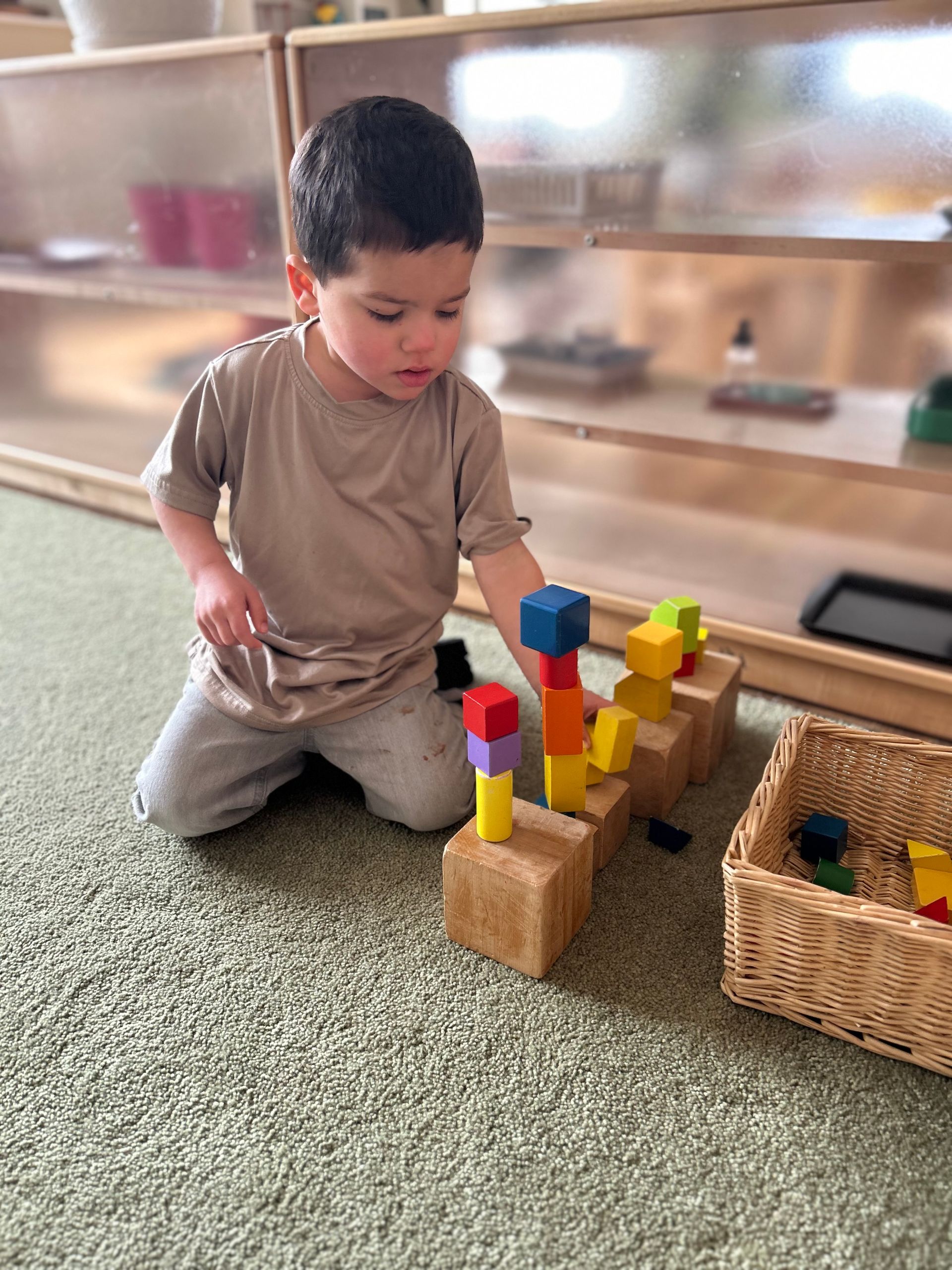
In Montessori, we often focus on how the environment educates the child, but just as powerful as the physical space is the presence of the adult within it. For children in the first three years of life, adults are not simply caregivers or teachers. We are models of movement, language, emotional regulation, and relationships. Being present with young children is about being present in a different way. From Birth to About 14 to 16 Months Infants are forming their earliest understanding of the world and of themselves. They observe everything! So the adult’s role requires a quiet strength and a deep level of self-awareness. To be present with infants, we must love without expectation. Infants are not able to return affection in predictable ways, and presence cannot be dependent on feedback or validation. This work requires patience, generosity, and emotional steadiness. Movement also matters deeply at this stage. Infants study how adults walk, reach, sit, and handle objects. Slow, intentional movement gives children something meaningful to absorb. When adults rush, babies feel it, even if they cannot name it. Our language, too, must be precise and respectful. Clear enunciation and specific wording help infants build an accurate internal map of their world. Vague language like “that” or “over there” offers little clarity. Instead, we want to name what we see and what we are doing: “I am placing the cup on the table.” Infants cry as their primary form of communication. Being present means responding without panic or frustration, and making thoughtful decisions even when there are multiple demands on our presence. Emotional regulation in adults becomes a sense of emotional safety for the child. Dynamic Toddlers As children grow into toddlers, our presence still needs to be very intentional, yet it also becomes more dynamic. While toddlers are building independence, they still need deep connection. For adults, this means remaining loving without demanding affection or closeness. Even physical affection requires consent: “Would you like a hug?” or “Do you need some comfort?” Respecting children’s autonomy builds trust and self-awareness. This stage is full of transitions, especially for children navigating new siblings, new communities, or a growing awareness of others. Sometimes toddlers want to be capable and independent. Then sometimes they want to be cared for like a baby again. Presence means honoring both without pushing the child prematurely in either direction. Limits are a key expression of presence. Clear, consistent boundaries create structure, and structure supports independence. A few simple rules, maintained calmly and consistently, help children orient themselves in the world. If power struggles emerge, we can use them as opportunities to reflect on control rather than behavior. If children have tantrums, presence means staying close without escalating. During the height of anger or upset, we may simply ensure safety. When a child moves into sadness or overwhelm, we can offer comfort and reassurance. The goal is not to stop the tantrum, but to support a child through it. Flexibility is another essential part of presence. Although routines give children a sense of security, rigidity can disconnect us from their real needs. Sometimes the best choice is to go outside, to move, or to shift the plan. When children feel secure, they can adapt, and so can we. Finally, presence means embracing life alongside children. Young children notice the world with fresh eyes. Weather, seasons, light, and movement all become sources of joy and wonder. When we allow ourselves to feel awe again, children experience validation that life is something rich and meaningful. Our Inner Work Being present with young children is demanding, not because of what children require, but because of what we must bring: patience, humility, emotional regulation, and a willingness to slow down. This work invites us to become more aware of ourselves: our language, our pace, our reactions, and our assumptions. In doing so, we offer children not just care, but a living model of how to be human in relationship with others. Presence is not perfection. It is mindful attention. And for young children, that attention becomes the foundation upon which everything else is built. Please visit our school in Old Saybrook, CT to learn more about how we think about the role of adults in children’s learning environment! .