A Pride Book List

Tamara Sevigny • June 6, 2022

Happy Pride Month! June is the month we celebrate the history and contributions of LGBTQ+ folks, and we are thrilled to share this special book list with you all. Whether someone in your family is LGBTQ+ or not, we could all benefit from reading these amazing titles. As always, regardless of your child’s age or reading level, we have tried to include a little something for everyone: from picture books right up through young adult fiction and graphic novels.


We hope you find one or two books to enjoy on this list, and if you have any you think others should know about, please share!

Picture Books
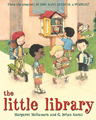
The Little Library

by Margaret MacNamara, illustrated by G. Brian Karas

Jake's class is so excited about the new school library…but not Jake. Jake isn’t a huge fan of reading, but he manages to make a connection with the new (nonbinary) librarian, and he discovers something he’s passionate about. Over the course of the school year, Jake’s perspective on reading changes, and he finds a special way to say thank you to Librarian Beck.
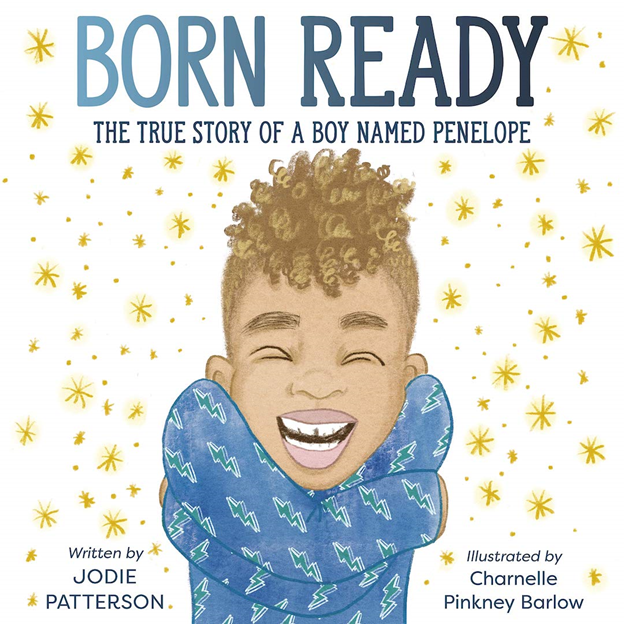
Born Ready: The True Story of a Boy Named Penelope

by Jodie Patterson, illustrated by Charnelle Pinkney Barlow

Penelope is named after his grandmother, but nothing feels quite right. He knows deep down that he’s a boy, but everyone else thinks he’s a girl. This makes him angry, and he feels unseen and unheard, until he talks to his mom. His fifth birthday is his chance to tell his loving family, and the next day at school, he confidently walks in with his new (to the rest of the world) identity.
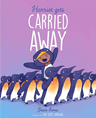
Harriet Gets Carried Away

by Jessie Sima

Harriet loves costumes, and she wears them everywhere she goes. As she gets ready for her birthday party, she and her two dads realize they need to run some last-minute errands. Her imagination gets a little carried away, and she finds herself on an adventure with penguins, an orca, and some helpful pigeons.

Children’s Nonfiction

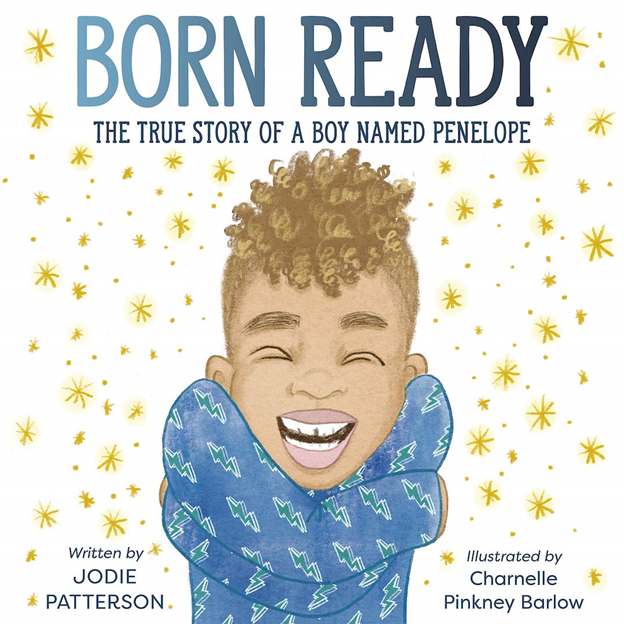
Born Ready: The True Story of a Boy Named Penelope

by Jodie Patterson, illustrated by Charnelle Pinkney Barlow

Penelope is named after his grandmother, but nothing feels quite right. He knows deep down that he’s a boy, but everyone else thinks he’s a girl. This makes him angry, and he feels unseen and unheard, until he talks to his mom. His fifth birthday is his chance to tell his loving family, and the next day at school, he confidently walks in with his new (to the rest of the world) identity.

People of Pride: 25 Great LGBTQ Americans

by Chase Clemesha, MD

Easy-to-read mini biographies, each accompanied by a photograph, share some of the most influential LGBTQ+ Americans’ lives. Additionally, there is a list of more notable people kids may want to learn about, a historical timeline of relevant events, and a glossary of helpful terms.
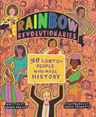
Rainbow Revolutionaries: 50 LGBTQ+ People Who Made History

by Sarah Prager, illustrated by Sarah Papworth

One of the coolest parts of this book is the colorful world map that shows the birthplaces of each person listed in the book. Prager wrote the book specifically to increase representation for youth: “When I was growing up, I didn’t know that LGBTQ+ people had changed the world, I wrote the book to make sure you never have to think that.”

Children’s Graphic Novels
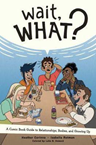
Wait, What?: A Comic Book Guide to Relationships, Bodies, and Growing Up by Heather Corinna and Isabella Rotman, colored by Luke B. Howard

Probably best for middle schoolers and up, this title says it all. Comprehensive, body positive, encouraging, and inclusive, this is a must-read as your child gets a bit older. 

Snapdragon

by Kat Leyh

Snapdragon is named after her mother’s favorite flower. She finds herself suddenly helping out the neighborhood “witch” and learns that not everything is as it first seems. Untangling family rumors, characters revealing true identities, and people showing their different sides, this book is magical, sweet, and entertaining. A variety of queer identities are represented. 

Middle Grade Fiction
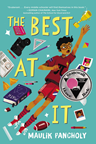
The Best at It

by Maulik Pancholy

A Stonewall Honor Book, The Best at It features a diverse cast of characters and exposes readers to different cultures and identities. Rahul is a very relatable and likable character who has set out to figure out just one thing he can be the best at. Motivated by his grandfather’s advice, he is determined to meet his goal, while trying to also stay true to himself.
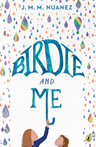
Birdie and Me

by J. M. M. Nuanez

Jack and her brother Birdie are dealing with the aftermath of their mother’s death. Their uncles share the responsibility of caring for the kids, but when they go to live with Uncle Patrick, things begin to change. Uncle Patrick doesn’t accept Birdie’s love for gender-noncomforming clothing, and when Birdie begins being bullied at school, Jack steps into the role of protective big sister. 

Both Can Be True 

by Jules Machias

Ash is nonbinary. Daniel often feels overwhelmed by his emotions. Somehow they both end up working together to save a dog, but Daniel doesn’t realize who Ash truly is. Their friendship evolves, and they have to figure out how to accept each other - and themselves. 

Young Adult
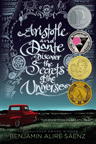
Aristotle and Dante Discover the Secrets of the Universe

by Benjamin Alire Sáenz

We typically try to recommend newer books, but this classic just cannot be left off the list. A sweet story of two teenage boys who meet and become fast friends. Over time, their relationship shifts, although it takes them each different amounts of time to recognize and acknowledge their feelings. They go through tragedies together, navigate major life changes, and depend upon their supportive families as they find their way.

The Girl from the Sea 

by Molly Knox Ostertag

A graphic novel that takes classic selkie folklore but makes it queer-friendly. Morgan meets Keltie, and her whole life begins to change. She faces family upset, environmental problems, and a first love she never anticipated. 

Elatsoe

by Darcie Little Badger

This book fills two much-needed niches: Indigenous experiences and asexual experiences. Blending fantasy and reality, this book is well-loved by teens. 

Subscribe to our Blog

You might also like
By Danielle Giordano March 23, 2026
For many of us, we remember learning long division as a confusing sequence of steps to memorize and repeat (bring down, divide, multiply, subtract), often without a real sense of why it works. In Montessori classrooms, long division unfolds very differently. Through the Racks and Tubes material, children get to experience what division actually is. Two Ways to Divide: Sharing and Grouping Before introducing the material, we first clarify an important idea: there are two different kinds of division problems in real life. One asks, “If I share this equally, how much does each person get?” This is partitive division, or division by sharing. The other asks, “If I make groups of a certain size, how many groups can I make?” This is measurement division, or division by grouping. The Racks and Tubes material focuses on partitive division. Children physically share quantities equally and discover what one share receives. Materials like the Stamp Game emphasize division of measurement. Together, these approaches give children a complete understanding of division and help them choose the strategy that best fits a given problem. What Are Racks and Tubes? At first glance, the material is impressive and a little mysterious. Children are often drawn to the material, both for its beauty and its seeming complexity. Racks hold test tubes filled with beads, carefully color-coded by place value: units, tens, hundreds, thousands, all the way up to millions. Matching cups hold the dividend (the number being divided). Boards and skittles represent the divisor (the number doing the dividing). Every detail of the material reinforces place value. Each time children need to make an exchange, they trade in one bead of one category for ten of the next category (e.g. one hundred becomes ten 10’s). This process is visible and incredibly concrete. This material takes intentional focus. It takes time. And it makes the steps of long division clear. How Long Division Becomes Concrete When children solve a division problem with Racks and Tubes, they follow a logical, embodied process: They build the dividend using the racks and cups. They represent the divisor with individual figures on boards. They share beads one at a time, equally, to each part of the divisor. They stop when sharing is no longer possible and then see what remains from that category. They then bring down the next category of beads to continue the sharing process. Each step answers a real question: What does one unit get? What happens when we run out? What do we do with what’s left? Instead of being told “bring down the next digit,” children literally bring down the next category of beads. When exchanges are needed, they perform them physically by trading beads. Remainders are not mysterious leftovers. They are beads still sitting in the cup. Long division becomes a story children can follow. From Material to Abstraction One of the most beautiful aspects of this work is how naturally it leads into abstraction. At first, children record only the quotient. Later, they begin recording intermediate remainders. Eventually, they discover that multiplying the quotient by the divisor tells them how much has been used at each step. This is the very heart of the traditional algorithm. We don’t give abstract shortcuts. Instead we help children discover the pattern. This allows them to own the process. By the time children are working abstractly on paper, the algorithm already makes sense. It matches what their hands have done again and again. Why This Matters The Racks and Tubes material does more than teach division. It teaches: Deep place value understanding Logical sequencing Patience and precision Trust in one’s own reasoning Most importantly, it gives children confidence. Division is no longer something done to them. Instead, they can think through the process, step by step, with meaning and understanding. In Montessori, math is not about getting the answer quickly. It’s about building an understanding of why the process and answer makes sense. And with Racks and Tubes, long division finally does! Schedule a visit to our classrooms in Old Saybrook, CT to see for yourself!
By Danielle Giordano March 16, 2026
In Montessori, we often focus on how the environment educates the child, but just as powerful as the physical space is the presence of the adult within it. For children in the first three years of life, adults are not simply caregivers or teachers. We are models of movement, language, emotional regulation, and relationships. Being present with young children is about being present in a different way. From Birth to About 14 to 16 Months Infants are forming their earliest understanding of the world and of themselves. They observe everything! So the adult’s role requires a quiet strength and a deep level of self-awareness. To be present with infants, we must love without expectation. Infants are not able to return affection in predictable ways, and presence cannot be dependent on feedback or validation. This work requires patience, generosity, and emotional steadiness. Movement also matters deeply at this stage. Infants study how adults walk, reach, sit, and handle objects. Slow, intentional movement gives children something meaningful to absorb. When adults rush, babies feel it, even if they cannot name it. Our language, too, must be precise and respectful. Clear enunciation and specific wording help infants build an accurate internal map of their world. Vague language like “that” or “over there” offers little clarity. Instead, we want to name what we see and what we are doing: “I am placing the cup on the table.” Infants cry as their primary form of communication. Being present means responding without panic or frustration, and making thoughtful decisions even when there are multiple demands on our presence. Emotional regulation in adults becomes a sense of emotional safety for the child. Dynamic Toddlers As children grow into toddlers, our presence still needs to be very intentional, yet it also becomes more dynamic. While toddlers are building independence, they still need deep connection. For adults, this means remaining loving without demanding affection or closeness. Even physical affection requires consent: “Would you like a hug?” or “Do you need some comfort?” Respecting children’s autonomy builds trust and self-awareness. This stage is full of transitions, especially for children navigating new siblings, new communities, or a growing awareness of others. Sometimes toddlers want to be capable and independent. Then sometimes they want to be cared for like a baby again. Presence means honoring both without pushing the child prematurely in either direction. Limits are a key expression of presence. Clear, consistent boundaries create structure, and structure supports independence. A few simple rules, maintained calmly and consistently, help children orient themselves in the world. If power struggles emerge, we can use them as opportunities to reflect on control rather than behavior. If children have tantrums, presence means staying close without escalating. During the height of anger or upset, we may simply ensure safety. When a child moves into sadness or overwhelm, we can offer comfort and reassurance. The goal is not to stop the tantrum, but to support a child through it. Flexibility is another essential part of presence. Although routines give children a sense of security, rigidity can disconnect us from their real needs. Sometimes the best choice is to go outside, to move, or to shift the plan. When children feel secure, they can adapt, and so can we. Finally, presence means embracing life alongside children. Young children notice the world with fresh eyes. Weather, seasons, light, and movement all become sources of joy and wonder. When we allow ourselves to feel awe again, children experience validation that life is something rich and meaningful. Our Inner Work Being present with young children is demanding, not because of what children require, but because of what we must bring: patience, humility, emotional regulation, and a willingness to slow down. This work invites us to become more aware of ourselves: our language, our pace, our reactions, and our assumptions. In doing so, we offer children not just care, but a living model of how to be human in relationship with others. Presence is not perfection. It is mindful attention. And for young children, that attention becomes the foundation upon which everything else is built. Please visit our school in Old Saybrook, CT to learn more about how we think about the role of adults in children’s learning environment! .
By Danielle Giordano March 9, 2026
When children begin working with pronouns in Montessori, they are not learning something entirely new. Instead, they are bringing to consciousness language they already use every day. Pronoun work builds slowly and intentionally. It is not about mastering grammar rules, but about understanding how language functions and how meaning is carried when words stand in for one another. Beginning With Experience, Not Explanation Montessori pronoun work begins with movement and spoken language, not written grammar. We start with little oral games to highlight how a pronoun functions, sometimes eliminating the pronoun (“Josie and John and Jack and Josiah are walking around the table.”) and other times emphasizing the pronoun (“They are walking around the table.”). The children love acting out the phrases, sometimes chanting, moving, watching one another, and laughing. Through these physical experiences, they begin to notice that we don’t always use names when we speak. Certain words take the place of a noun, and the meaning is still clear. At this stage, we don’t offer the term pronoun because we want children to simply experience its function. From Movement to Sentences Once children are ready for more structured language work, we introduce them to the Pronoun Grammar Box so they can build and rebuild sentences using color-coded cards for each part of speech. From one sentence to the next, only a few words change as nouns get replaced by pronouns. By comparing sentences, children discover that although the word changes, the sentence still makes sense. This comparison is essential. Rather than being told what a pronoun is, children see what it does. We then invite children to add grammar symbols to the sentence (noun, article, adjective, verb, preposition, adverb) until we finally draw attention to the remaining word: “This word is used in place of a noun.” Only then do we introduce the pronoun symbol: a purple isosceles triangle, the height of the noun symbol. Montessori Lore: The Pronoun’s Story There’s a beloved story about the pronoun symbol. Long ago, the pronoun was shorter and a different color. Wanting to be as important as the noun, it stretched itself taller and taller to reach the same height. As it stretched, its base became smaller and it turned purple from the effort of standing in the noun’s place. It’s a poetic reminder of what children discover through their work: a pronoun depends on the noun, borrowing its meaning while standing in for it. Why Pronouns Come Later Pronouns are more abstract than other parts of speech. To understand a pronoun, children must already have a strong, concrete understanding of the noun. For this reason, pronouns (along with interjections) are typically introduced later than other grammar symbols, often in the elementary years. Even then, one lesson is not enough. In Montessori, the real learning happens after the presentation, when we step back and children work independently with the material. The guide’s role is to show how to use the material, not to explain grammar in detail. Understanding emerges through repeated use. Deepening Understanding Through Play and Exploration As children grow more confident, the work expands to include: Transposition games, where pronouns are removed or replaced to explore how meaning changes. Command cards, which physically isolate pronouns through action. Personal pronoun charts, introducing first, second, and third person (singular and plural) through storytelling. The Verb Family, where children explore the close relationship between the verb, adverb, and pronoun. Children discover that pronouns often work closely with verbs, helping to carry action and meaning through a sentence. Subtleties Come Later At first, Montessori avoids getting caught in fine distinctions. Over time, children may explore nuances such as the difference between possessive pronouns (the book is mine) and possessive adjectives (my book). These discussions often happen later, sometimes with the support of grammar references, once children have a solid foundation. Language Revealed, Not Taught Through this carefully layered progression of movement, sentence work, symbols, and exploration, children develop a deep understanding of how words function differently in sentences. Montessori grammar invites children to discover how language works at their own pace through hands-on exploration. We don’t rush this process. So by the time children are ready to name the pronoun, it’s not a new idea. It’s something they already know. We invite you to visit our classrooms in Old Saybrook, CT to see firsthand the children’s joy of learning!
More Posts